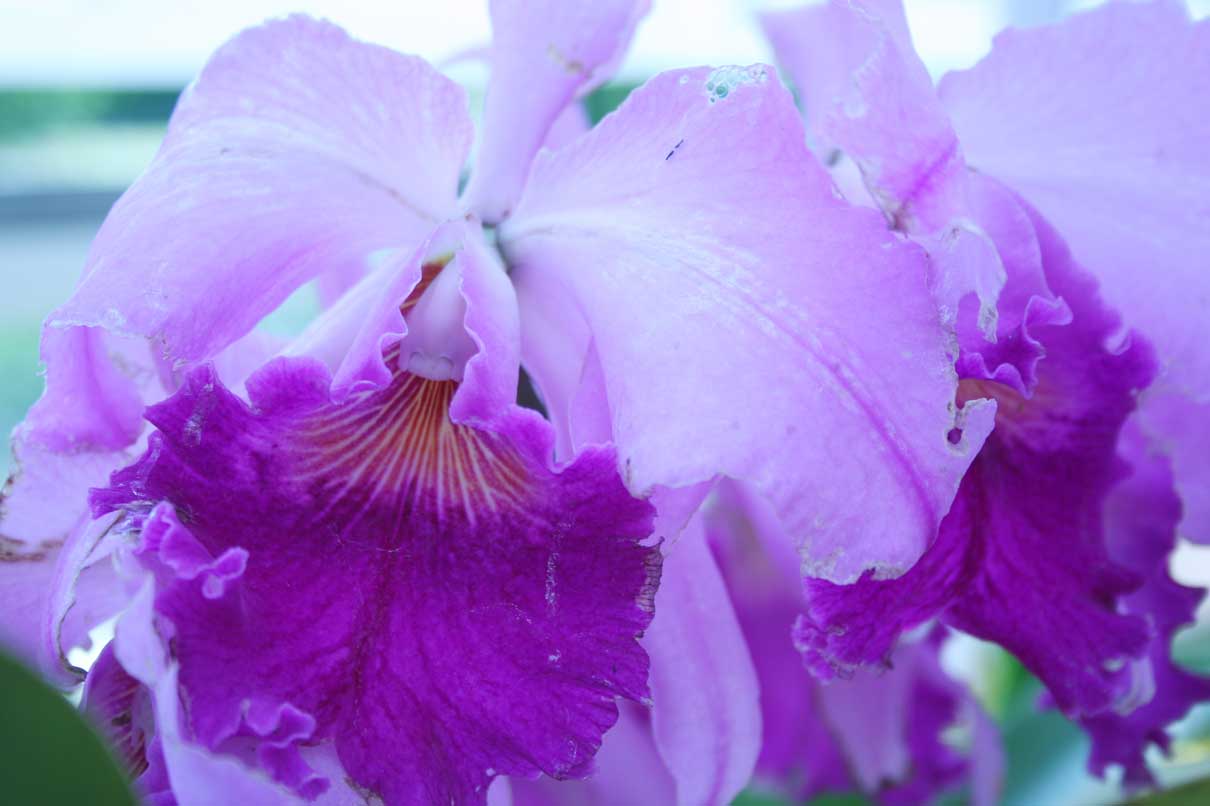
When you do to Hills and Dales they immediately tell you that its history includes two families. The Ferrell story and the Callaway story. As we were touring the gardens, it was evident that the timeline of the story began some 180 years ago as Sarah Ferrell moved to her mother's home and began to expand the garden using slave labor. Every where you look you can see her desire to glorify God using religious symbols grown in boxwoods surrounded by flowers, trees, statues and religious topiaries.
The history might have ended with Ferrell except for two things. The Ferrells opened their gardens to the people of LaGrange and therefore to a young son of a Baptist minister, Fuller Callaway who often visited the gardens walking with Mrs. Ferrell and discussing spiritual matters. In 1911, after Callaway proved to be a successful businessman and Ferrell had passed away, he purchased the property deciding to keep the gardens intact and build a new home for his family.
At this point, Ida Cason Callaway became the garden keeper of their new Italian Georgian home and gardens. Mrs. Callaway not only tended the gardens but expanded on them.

As we walked around the back of the house, we could tell we were in a more modern garden. Ida Cason Callaway tended the garden from 1911 until her death in 1936 and Alice Hand Callaway because the garden tender for the next 62 years. After her death in 1998, Hills and Dales and Ferrell Gardens were bequeathed to the Fuller E. Callaway Foundation to be used for education and enjoyment.
I imagine that each garden tender had her own ideas for improvements to the gardens, yet each new tender respected the hard work of her predecessor keeping much of the previous gardener's design ideas intact.

Behind the greenhouse are several cutting gardens with flowers appearing to grow wild everywhere. I don't know who started these gardens, but I can imagine that Ida Cason Callaway used them to keep her new home filled with beautiful flowers all year. I am sure Alice Hand Callaway and later the Callaway Foundation found this to be a good practice.

I loved the row of pots with tomatoes lining one of the cutting gardens.

I loved the twig arbor in the cutting gardens. It is something I could build myself and it was charming right next to the old bird feeder with the rusted tin roof.

It is such a wild, yet controlled area.


The herb gardens in front of the greenhouse look quite modern.

Looking back over the area between the garage and the greenhouse you can see the gardens at the back of the house and it is a lovely view.

I really, really loved the yarrow that is between the new and old parts of the garden. I noticed that they dried the yarrow to use in arrangements. It is really beautiful and useful--great for the butterflies and bees, too.

The view of the house made me feel I was in the gardens of an Italian villa with the Italian Cypress evergreen spires around the house.

We walked down the Florida walkway to the oldest part of the garden.

Arriving at the Church Garden or Santuary, it is obvious this was created many, many years ago. It is surrounded by boxwoods. Four Chinese firs with wisteria vines growing to form a canopy.


As you walk away from the Church garden you seed the canopy and a maze of boxwoods including Dwarf English, American, tree, Spanish and curly leaf boxwoods.

Another China fir shades more of boxwood walkways.

The centers of the boxwood groupings surround profusions of flowers.


A number of walkways, including lover's lane are still a beautiful place to stroll.

I can't help but wonder how gardeners get into the circular hedges to tend the plants in the center without damaging the hedges.

Many of the hedges are shaped in religious symbols like this lyre and the cross below. A famous grouping of boxwoods I unfortunately didn't photograph are the grapes. Sarah Ferrell's inspiration for these topiaries was from Numbers.


This area of the garden was redesigned by Fuller Callaway Sr. and Alice Callaway added this statue of St. Fiacre to the area. It was originally Sarah Ferrell's Maze garden.

The large fountain next to the house was added in 1916 when the house was built.

A circle of small boxwoods surround the fountain and a row of calla lilies, a favorite of Ida Cason Callaway.

I don't know who is responsible for the sunken gardens and the curved bench that is the central feature. The curved sofa in the living room of the house is said to modeled after this bench.


The God topiary is next and it is a beautiful grouping of hedges with flowers growing in the center and spelling out God. This was also designed by Sarah Ferrell. If you will notice, the hedge that looks like it has a dip growing above the God topiary is the tea hedge, camellia sinensis. This hedge probably provided tea for the Callaway family.


It is very pretty and I think amazing that a something this large could spell the letters so perfectly.

The bird gate was designed by Alice Callaway in the later years and though it was a later design, it fits the garden perfectly.

After we finished the garden tour, we went around to the back of the house for an al fresco lunch under the oaks. A perfect meal before a tour of an Italian villa.