Saturday, October 5, 2013

Brown Turkey Figs-- A Plus For the Garden or Yard


Brown Turkey Figs (Ficus carica) produce brown purplish fruit twice a year in late spring and again in late summer. Figs are sweet and nutritious, loaded with potassium, calcium, plenty of fiber and are good fresh or dried.

Whether, eaten fresh or dried this fruit (with it's Mediterranean origin) is filled with antioxidants, also has a laxative effect and is good for blood pressure.


Growing up, I remember our fig bush next to the pump house. Every year mother would make preserves (enough to last until the next year's harvest) and what a treat with toast, butter and sometimes homemade biscuits. Her canned preserve recipe was sweet with syrup and whole figs.


Figs are easy to root (one of the best ways to propagate), only need light to medium soil, only need consistent watering when first planted, and don't need much fertilizer. A little sun, some shelter and shade helps, but this hardy bush will do fine in full sun areas.


The fig leaf has represented the protector of modesty as seen in sculptures of Greek and Roman statures/paintings, as well as, Adam and Eve in the "Garden of Eden."

Regardless of what fruit is your favorite to plant in the garden, a fig will be a plus. So....


Until Next Time........

Happy Gardening 2013!


Posted by Wilma Smith

Thursday, September 26, 2013

An Unusual Sepember Garden


This year we had an especially unusual September garden, but as you see above "the fruits of our labor" in prior years and early this spring sustained any neglect made in the month of September. It seems, Jerry tilled and picked while Deberah worked on her projects and I worked on mine. I replaced carpet with other flooring, replaced a deck on the back of my house and replaced lots of pipes, faucets, etc. as well as, a few light fixtures.

Lucky for us there were no big insect infestations and the rain made the difference in growing plants and our harvest. I like to think our garden took care of itself.


2013 was the first year we had watermelons grow bigger than baseballs. Maybe it was due to Mr. Basil the garden cat, keeping the critters out, or the honey bees doing their job, maybe both.


I watched hummingbirds, as well as, honey bees pollinating the okra blooms. One of the best seasons ever for our okra harvest even though we planted late.


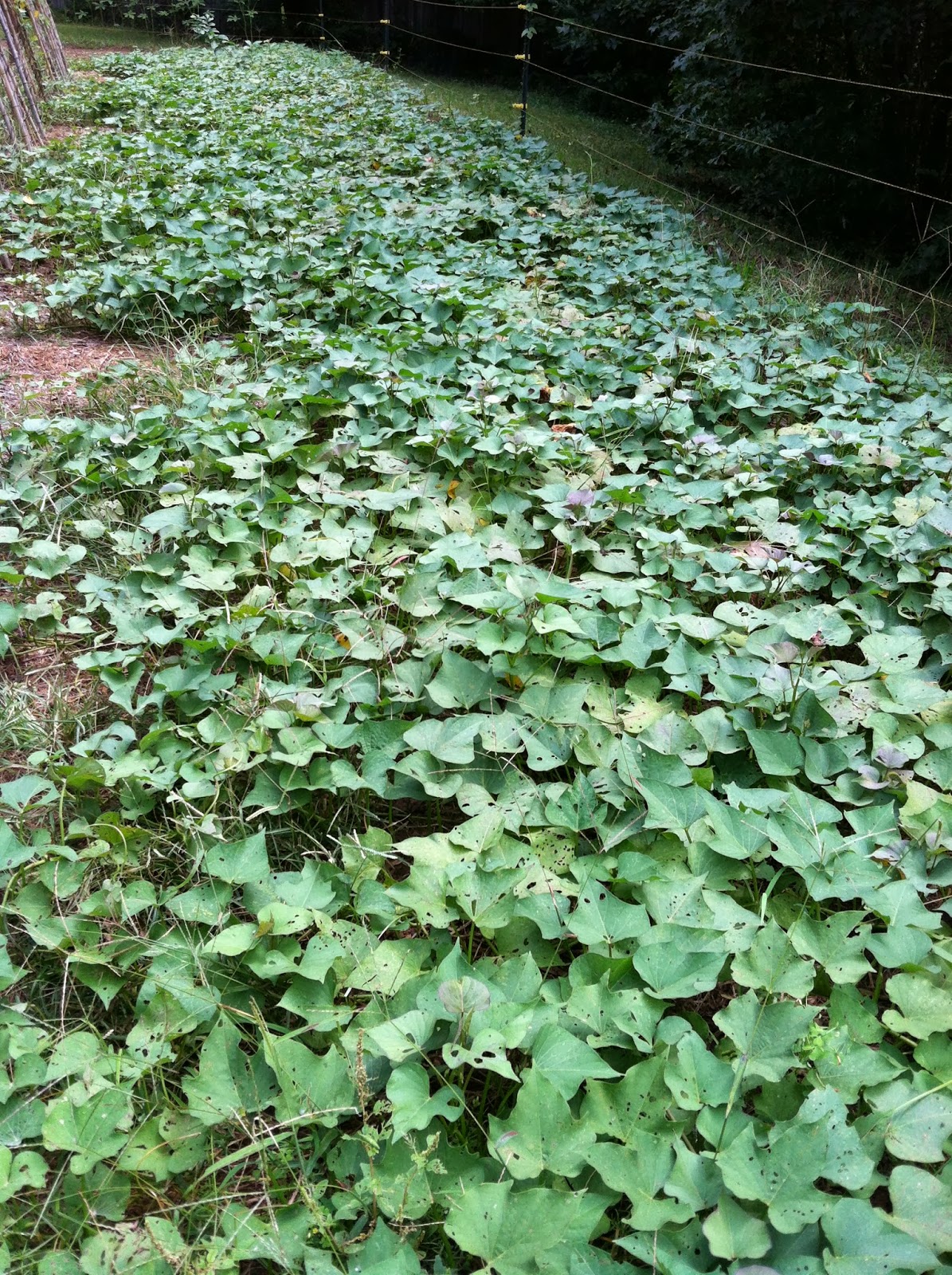
The sweet potatoes (grown in a different section of the garden) is still going strong this month. We've dug lots up and had at least three meals that included baked sweet taters.

Also, besides the tomatillos, the peppers (sweet, bell, hot and hotter) are continuing to grow. Sorry no pictures on this blog.


Also, the fishing seems to be better than ever this month. My favorite cousin Cary Smith (seen above) caught this beauty, after a couple of visits this month. Congratulations!!


We have usually watered the garden from the two acre lake next to the garden (especially during Georgia's extreme drought in our area), however I don't think it's been necessary this whole year to water except two or three times this September.

Now that is very unusual!


Until Next Time..........

Happy Gardening 2014


Posted by Wilma Smith

Saturday, September 21, 2013

Congradulations Sis! -- Master Gardener


I wanted to congratulate my sister for being selected as a candidate for the Coweta County Master Gardener Program 2014. The selection process is not easy, you apply, then you may or may not get an interview. It is competitive but Deberah made it through every stage. She is well deserving and will become a great addition to the Master Gardening Program for our county.

I love the picture of her I found in my archives! She is truly the "Martha Stewart" of gardening and cooking in our family and I am very proud of her.


Deberah and Jerry are not only family, they are also true gardening friends. Over the years, together we've learned a lot about organic gardening throughout all the seasons, spring, summer, fall and winter.
 
I am looking forward to learning from Deberah's new experience as a Master Gardener. Bet we'll have a better garden next year!
 
Congratulations Deberah!! I love you!!! 
 
So...
 
Until Next Time......
 
Happy Gardening 2013
 
 
Posted by Wilma Smith


Thursday, September 12, 2013

Tomatillo -- "Little Mexican Tomato"


This year we planted a different "tomato" in our garden known as the tomatillo (Physalis philadelphica) or known in Mexico as the "little green tomate." The tomatillo originated and was first cultivated in Mexico by the Aztecs in 800 B.C. Later it was imported to Europe and other parts of the world by the Spaniards. Today it is still a staple of Mexican crusine, commonly found growing as a annual field weed.

As you see above the fruit grows inside a paper husk and is the approximate size of a cherry tomato, however, although it is kin to the tomato, it is a night shade plant closer related to the Cape Gooseberry. The fruit matures as it fills the husk and may turn several colors in the process, such as, yellow, red or purple but it is best to harvest and prepare while green. The citrusy, sweet flavor adds a fresh, unusual flavor to any Mexican dish or recipe.


The tomatillo plant is drought resistant, needs full sun, well drained rich soil (raised beds work great) when growing. Like tomatoes plant deep and space approximately 3 feet apart, as the height can reach 3 to 4 feet. 
 
Other names used for this "little Mexican tomato" is husk tomato, jamberry, husk cherry and tomate verde. It gets 5 stars for weight loss and healthy eating, as it contains zero fat and only eleven calories per serving (34 grams). The tomatillo is also packed full of vitamins and minerals like vitamin C, vitamin K, iron, magnesium, niacin, potassium, as well as, lends lots of dietary fiber to any palate.
 
Regarding all these factors, we hope our experiment growing tomatillos will be successful and they will become a permanent addition every year to our organic garden.


Tomatillos are used in salsas, dips, sauces for meats, jams, preserves and hundreds of favorite Mexican dishes, just like the recipe below, Salsa Verde:

Ingredients:

2 large fresh red or green Anaheim chili peppers
1/2 pound fresh tomatillos
1 1/2 cup low salt chicken broth
2 large chopped green onions
1 large Serranto chili pepper, stemmed and seeded
1 large clove garlic
1/4 cup firmly packed cilantro leaves
1/4 cup half & half, heavy cream, sour cream or whipping cream

Preparation:

Char Anaheim chilies on a grill or oven broiler until blackened. Enclose in a paper bag for 10 minutes. Rinse, dry and chop chilies. Wash tomatillos (no need to skin or seed). In a medium sauce pan add tomatillos, chicken broth, chopped green onion, Serranto chili and garlic. Bring mixture to a boil then reduce to medium heat. Simmer for approximately 18 minutes or until mixture is reduced to about 1 2/3 cups. Cool then place in blender and puree adding remaining ingredients. Salsa can be made in advance, serving cold, or warm. Makes approximately 2 cups.

If you like this "little Mexican tomato" give it a try in your garden next year or just find a good market to buy them fresh. So....


Until Next Time.........

Happy Gardening 2013!


Posted by Wilma Smith

Tuesday, August 27, 2013

Imaginary Worlds -- "Plants Larger Than Life"


This past week, Crossroads Garden Club Members (including me) took a field trip to the Atlanta Botanical Gardens. For eight years, I had a membership to the gardens (as I worked downtown for ten years) but I had not visited for five years since I retired. The improvements and additions were a wonderful surprise, but the Imaginary World Exhibition was fantastic!

Regardless, if you like plants, art or things bigger than life, you'll probably love my blog tour today of the Imaginary Worlds Exhibition.

Above, as you enter the gardens from the new visitor center, two cobras greet you on each side of the walkway. Due to the large amount of rain, as well as, maintenance, we found employees working on both cobras. They were trimming and replacing plants as needed.


An ogre, protects the Day Hall, feet from the cobras. He has a small tunnel at the back of his head, perfect for children to walk through.

Over one hundred thousand plants are used to make 19 living sculptures in this exhibit. It is the first to be displayed in any garden in the United States.


Two butterflies are a few examples of mosaiculture art that is centuries old and a creative collaboration between the Atlanta Botanical Garden and the International Mosaiciculture of Montreal, a non-profit organization.


Close to the Cascade Garden is a unicorn grazing in a pasture. Growing up we had horses grazing in pastures but none had horns.


Since I'm a dog person, the shaggy dog was one of my favorite exhibits. The hair is made from grass.


Sweet potato vines are used for the earth goddesses' s hair. She is the only mosaiculture sculpture kept as a permanent fixture at the gardens.


Rabbits munch on plants close to the walkway at the great lawn.


In the edible garden berries smile on peppers, tomatoes, squash, apples growing on one side and a large herb wall growing on the other.


Dancing fish rotate in a fountain as you exit the Fuqua Conservatory and walk the vine arbor toward the Japanese and rose gardens.


Another cobra stands to the right as you exit the gardens to the visitor center and parking garage.

These topiaries are larger than life and the Atlanta Botanical Gardens gives you a view into a world you can only imagine!

Pencil thin steel is welded into different animal, human and plant shapes. Afterwards, the forms are filled with growing medium and covered with a type of shade cloth. Grasses, succulents, plugs of annual, perennial blooming and green foliage takes several months to take form. Daily maintenance is needed to keep the artistic lines of the sculptures at their best.


Until Next Time.......

Happy Gardening 2013!


Posted by Wilma Smith

Monday, August 26, 2013

CRGC Meeting: Successes and pitfalls of a new gardener


Tonight is the August meeting of Crossroads Garden Club. Dianne and Mike Carnicom will present the highlights, successes and challenges of growing a new garden. This past season has been their first year growing a backyard garden and they will be presenting a slide show with photos showing how they started their garden and the perceptions of a new vegetable garden, including what their thoughts are now with a season of vegetable gardening under their belts. They will share their successes and failures. I know this will be enjoyable for all gardeners--since we have all been there at one time or another.

This presentation will be of special interest to gardeners who are just exploring gardening in their backyards. Below is a photo of one of their beds as they began their garden.

The meeting is at 7:00pm at 3072 Highway 154, Newnan.


Tuesday, August 20, 2013

Gingers -- a Snap to Grow


Ginger lilies are members of the Zingiberaceae family, a tropical perennial originating from Southern Asia and introduced to Europe in the early 1800's.

Last week, Crossroads Garden Club members, Mike (Vice President) and Cindy Christie, invited
members to their house to enjoy their gingers blooming in their gardens. Although (embarrassing), I wasn't familiar with ginger plants, I knew they must be spectacular and was very excited to oblige.

Oh boy, what a treat to enjoy their tropical paradise only a few miles from my house! My experience with growing tropical plants has been elephant ears, canna and an occasional banana plant (very occasional, once).

But for Mike and Cindy growing ginger plants or lilies are a snap.


Gingers come in many sizes, shapes and colors (white, yellow, pink and red). They like rich soil full of humus and plenty of moisture. Good drainage is also a must, many varieties can withstand a slight freeze, so our central Georgia, sub-tropical climate will sustain many varieties over winter.


Above you see a ginger that makes a good border plant. Many types will grow to seven, plus feet making a great plant to locate at the back of a garden spot. Gingers, also look good in pots on decks, patios and balconies. Grow in partial shade to full sun.


Mike and Cindy moved here twenty years ago from our neighbor "sunshine" state, Florida and have been working to fill their yard with tropical plants, ever since. Gingers are only one of their favorite plants, they also have cannas, ferns, hostas, azaleas, and more than I can remember including a fifteen foot (or taller) palm tree. I took 87 pictures total of all the different foliage around their house.


Mike admits the hardest job sustaining his tropical paradise is moving his potted plants inside during winter and back out in spring, however, his citrus trees like this lemon tree seen above is not a problem, as they enjoy using the fruit.


Limes, seen above, are used in many recipes, as well as, herbs grown in pots all around the deck located at the back of their home, different types of basil, thyme, rosemary and yes, even an edible ginger spice plant.


The back drop off their deck is filled with healthy tropical plants. Am I somewhere vacationing close the equator?


Mike is very proud of this tangerine, seen above, his favorite citrus growing in the back yard. 


After twenty years, this area is the only grass left in their yard. Amazingly, they live in a subdivision where everyone has lots of grass to cut. Gosh, wish I could get rid of the four acres I cut every week!


Garden ornaments, arbors, bird baths, statues are everywhere mingled within all the gardens. Check out the ginger to the right of this picture.


Recently, this attractive rock walkway was installed leading down to the backyard. Gingers, ferns and other tropical plants are planted on each side.


This gorgeous white ginger seen above is a variety that adds a sweet smell to any are similar to gardenias.
 
I've never considered growing ginger plants, but Mike and Cindy make it look easy to grow this beautiful summer bloomer just "a Snap to Grow." I think I'll plant some in the spring next to my elephant ears and canna plants (I may even try another banana), hope you try, too.


Until Next Time.......
 
Happy Gardening 2013!
 
 
Posted by Wilma Smith