Wednesday, October 30, 2013

October -- Cooler Weather Plants Love the Temperature


Lately, nights are cooler and our October garden plants love the drop in temperatures. Collards (Brassica olerocea) is just one plant in this family that thrives in cooler temperatures. Other cousins include broccoli, cauliflower, brussel sprouts, kale, turnip greens, spinach and mustard greens.

No doubt, collards and turnip greens are a favorite of southerners, year round. But a true tradition to cook on New Year's Day, with ham hocks, black-eyed peas and cornbread seeped in "pot liqueur" or not.

As a kid, I was told eating greens meant dollars in my pocket and peas were change in my pocket the next year. You can imagine, I tried to eat my weight in both! Regardless, I enjoyed the meal.


Our cabbage plants are beginning to head, however, will need at least 6 to 8 more weeks to grown big firm heads prior to harvest.

I love cabbage steamed, in cole slaw, as an addition to stir fry and even in vegetable soup. Also, it's a great diet food, fills you up and burns off more calories digesting than in a serving (0 fat, 0 cholesterol, plus good fiber content).


We planted organic sugar pod snow peas to our cooler weather garden. Usually, we plant these in early spring but decided to try them to harvest late November or early December this year.

These sugar pod snow peas will grow into bushes 24-34" and produce 3-4" pods, unlike most snow peas we have planted early spring in the past needing a trellis or fence.

And, yes the name snow pea does mean, it will continue to grow even if it snows and can survive freezing temps, if not prolonged.


Broccoli, seen above is also a member of the (Brassica olerocea) family. It's hard to tell the difference between the broccoli and collard plants, unless you look close and see the leaves of the broccoli is more scalloped or frilly.
 
This plant was first introduced to America by Italian immigrants and is no surprise that Italy takes credit for it's origin.


Brussel sprouts is another member of this family, I call "mini cabbages." They certainly look and taste similar. However, Belgium takes credit for the origin, even though this plant was first documented growing in ancient Rome.
 
The family of cool weather plants we're growing in our garden this year need between 40 - 67 degree temperatures (some can grow in 75 degrees temps and below 40 degrees) to thrive and produce.   
 
There is no doubt all are beneficial to our health, full of vitamins, minerals and vital nutrients. There is no doubt with a little work in the yard or garden they are easy to grow in cooler temperatures (especially in our climate), whether you use a conventional garden, raised beds or containers. So....
 
 
Until Next Time.........

Happy Gardening 2013!


Posted by Wilma Smith

Tuesday, October 22, 2013

"Favorite Cousins" -- The Legend of Blowing Rock


A couple of week ends ago, Deberah, Jerry and I attended an annual "Favorite Cousins Reunion" in Blowing Rock, North Carolina. My dad's side of the family had annual reunions, as long as I can remember. As, many brother's and sisters passed away (including my dad), us first cousins decided, we wouldn't let our parent's family tradition fade away. Around 12 years ago we began to have cousins reunion week ends every year. At first, it was a little awkward, as we weren't kids anymore and all had different interests but after several reunions we bonded and found lots in common due to the love of our parents and heritage.

This year "Favorite Cousin," Judy and her husband Eric, recommended spending a weekend at Blowing Rock, North Carolina. Judy and I were elected to find the accommodations, as well as, make the agenda.

One place we decided to visit was "The Blowing Rock." I didn't realize the name of the town was named from an Indian Legend until I did a little research. The afternoon we visited, it became cloudy, except for a few openings in the clouds allowing sun rays to shine down on some of the mountains and valleys.


The legend goes something like this:
 
In the area, two tribes, the Cherokee and Catawba Indians were hostile to each other, however, a brave from one tribe and a squaw from the other tribe became star crossed lovers and once met on the rock above the John's River Gorge. During their meeting a storm with red clouds formed over the mountains. The brave felt he should return to his people and resume his duties, but his lover begged him to stay. In his turmoil to choose he jumped off the rock into the gorge below. The squaw seeing him jump chanted to the wind to bring him back. Her prayers were answered as the wind blew the brave back up into her arms. 


 Above you can see, "The Blowing Rock."  I was surprised to find you can actually climb to the top.


Eric and I were the only two cousins brave enough to climb to the top (the rock was slippery).


An overlook has been built close to the rock. Judy and Eric (my favorite cousins) said they felt the wind behind them when I took their photo. Star crossed lovers?


Blowing Rock, North Carolina is located along the Blue Ridge Parkway. We were a little disappointed as the leaves weren't as colorful as we had hoped, but Judy's thoughtful agenda took us to a cheese factory in Ashe County and a visit to Ben Long's famous frescoes at two beautiful Episcopal churches located 45 minutes from Blowing Rock.

After we returned to Blowing Rock then shopped and ate on main street, enjoyed the house we rented with a mountain view, fire pit, outdoor Jacuzzi and rocking chair front porch, while grilling and chilling.


Me, I love the legend of the rock and the time spent at our "Favorite Cousin Reunion." I'm looking forward to next year. I need to mention all my favorite cousins enjoy gardening!

Nobody knows where we'll go next year or what legends we'll discover in 2014!! So...


Until Next Time........

Happy Gardening 2013!


Posted by Wilma Smith

Monday, October 14, 2013

Sweet Potatoes -- "Sweet Memories"


Several weeks ago, working in the garden we harvested our sweet potato crop. Above you can see, it was enough to share between, Deberah, Jerry and I, as well as, several other families. Previously, we had dug some for a few family dinners. While digging, I was reminded of "sweet memories."

The sweet potato (Ipomoea batatas) vine is a perennial summer crop grown all over the world. The fruit ranges in colors from red, orange, yellow, brown, purple and beige. This root vegetable was first domesticated in Central and South America thousands of years ago and spread to other tropical warm climates and eventually made it's way to Europe, Asian countries, North America (including Hawaii) by sea, birds and explorers.


The sweet potato prefers hot or warm weather, unlike the regular (Irish) potato that needs the cooler early spring or fall growing seasons seen in our region. Also, these two types of taters are not related at all.

After the first frost, we bought one flat of "Bonnie" plants called "Beauregard" sweet potato, tilled a row until the soil was fine, trenched the row 6 or 8 inches, then planted each 12 inches apart, while soaking the roots with water. After the vines began to grow, we broad casted organic fertilizer over the plants. Rows should be spaced 3 feet apart but as you see above one row was all we needed.

The fruit matures in approximately 95 days and continues to grow until frost or longer depending on the temperature. Once the vines begin to yellow, you should harvest (we always dig a few to check earlier).


Amazingly, the Ipomoea genus of the sweet potato is a cousin of the morning glory. It's heart shaped vine and short lived flower has also been cultivated today as an ornamental plant used in yard and garden landscaping.

Sweet potatoes are filled with beneficial nutrients and fiber to include vitamins A, C, B6, iron calcium, magnesium and plenty of potassium. The leaves and shoots are also edible and used in recipes in some cultures.


After the harvest, sweet potatoes need to sit and cure (unless used or processed, as they can be frozen). Dry for 10 to 14 days in a dark spot (like a basement) or somewhere around 75 degrees. If properly cured they can last up to 6 months.

Just a bit of sweet potato trivia, currently in the U.S., North Carolina leads all states with 38.5% production, followed by California, Louisiana and Mississippi.

Growing up, my "sweetest memories" of this nutritious root called sweet potato was associated with holidays, brown sugar, pecan topping, hot butter, melted marsh mellows that my mother made into casseroles, pies, pancakes, french fries, fried pies and whole, as a baked side!


Until Next Time..........

Happy Gardening 2013!

Posted by Wilma Smith

Saturday, October 5, 2013

Brown Turkey Figs-- A Plus For the Garden or Yard


Brown Turkey Figs (Ficus carica) produce brown purplish fruit twice a year in late spring and again in late summer. Figs are sweet and nutritious, loaded with potassium, calcium, plenty of fiber and are good fresh or dried.

Whether, eaten fresh or dried this fruit (with it's Mediterranean origin) is filled with antioxidants, also has a laxative effect and is good for blood pressure.


Growing up, I remember our fig bush next to the pump house. Every year mother would make preserves (enough to last until the next year's harvest) and what a treat with toast, butter and sometimes homemade biscuits. Her canned preserve recipe was sweet with syrup and whole figs.


Figs are easy to root (one of the best ways to propagate), only need light to medium soil, only need consistent watering when first planted, and don't need much fertilizer. A little sun, some shelter and shade helps, but this hardy bush will do fine in full sun areas.


The fig leaf has represented the protector of modesty as seen in sculptures of Greek and Roman statures/paintings, as well as, Adam and Eve in the "Garden of Eden."

Regardless of what fruit is your favorite to plant in the garden, a fig will be a plus. So....


Until Next Time........

Happy Gardening 2013!


Posted by Wilma Smith

Thursday, September 26, 2013

An Unusual Sepember Garden


This year we had an especially unusual September garden, but as you see above "the fruits of our labor" in prior years and early this spring sustained any neglect made in the month of September. It seems, Jerry tilled and picked while Deberah worked on her projects and I worked on mine. I replaced carpet with other flooring, replaced a deck on the back of my house and replaced lots of pipes, faucets, etc. as well as, a few light fixtures.

Lucky for us there were no big insect infestations and the rain made the difference in growing plants and our harvest. I like to think our garden took care of itself.


2013 was the first year we had watermelons grow bigger than baseballs. Maybe it was due to Mr. Basil the garden cat, keeping the critters out, or the honey bees doing their job, maybe both.


I watched hummingbirds, as well as, honey bees pollinating the okra blooms. One of the best seasons ever for our okra harvest even though we planted late.


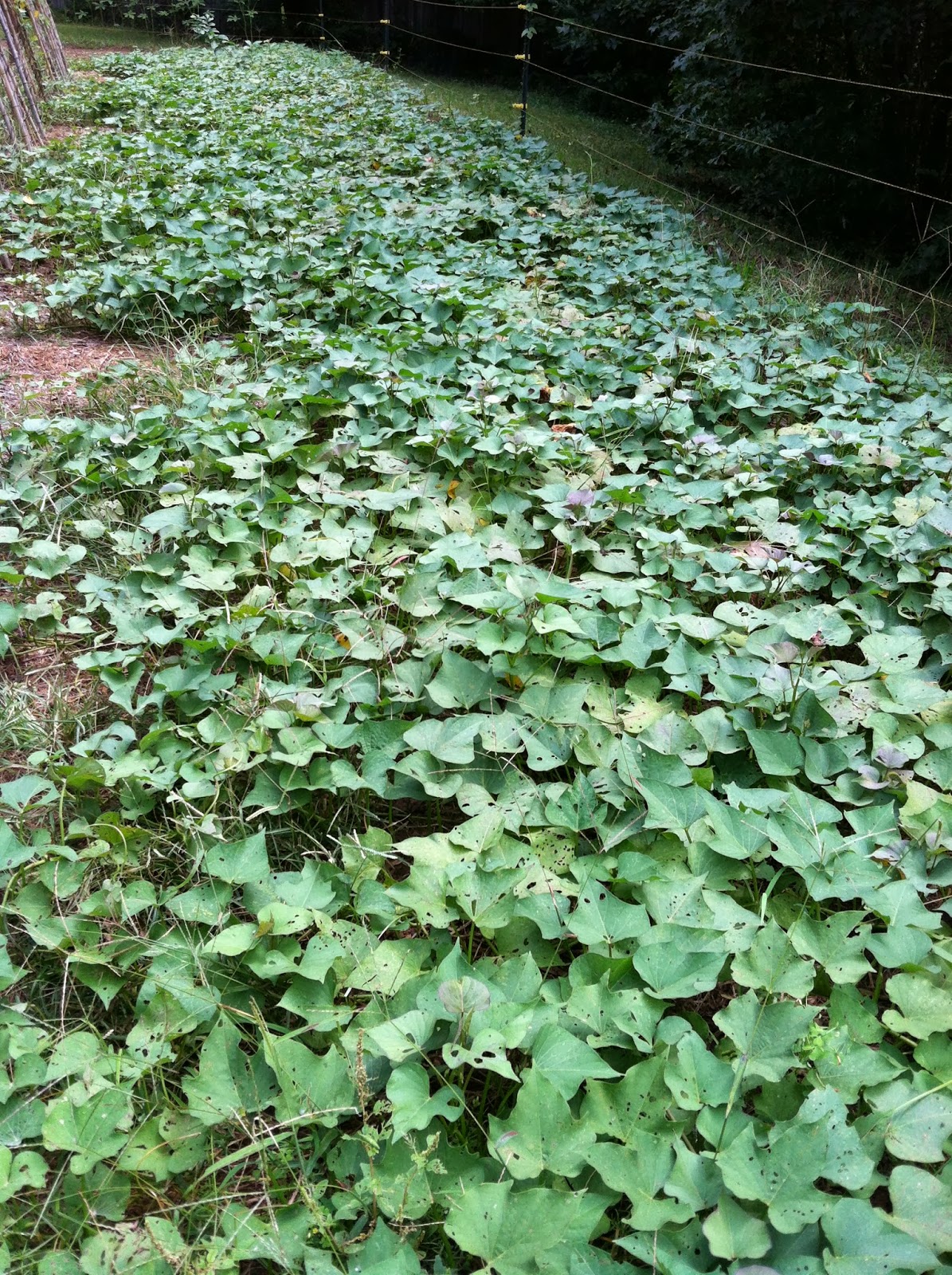
The sweet potatoes (grown in a different section of the garden) is still going strong this month. We've dug lots up and had at least three meals that included baked sweet taters.

Also, besides the tomatillos, the peppers (sweet, bell, hot and hotter) are continuing to grow. Sorry no pictures on this blog.


Also, the fishing seems to be better than ever this month. My favorite cousin Cary Smith (seen above) caught this beauty, after a couple of visits this month. Congratulations!!


We have usually watered the garden from the two acre lake next to the garden (especially during Georgia's extreme drought in our area), however I don't think it's been necessary this whole year to water except two or three times this September.

Now that is very unusual!


Until Next Time..........

Happy Gardening 2014


Posted by Wilma Smith

Saturday, September 21, 2013

Congradulations Sis! -- Master Gardener


I wanted to congratulate my sister for being selected as a candidate for the Coweta County Master Gardener Program 2014. The selection process is not easy, you apply, then you may or may not get an interview. It is competitive but Deberah made it through every stage. She is well deserving and will become a great addition to the Master Gardening Program for our county.

I love the picture of her I found in my archives! She is truly the "Martha Stewart" of gardening and cooking in our family and I am very proud of her.


Deberah and Jerry are not only family, they are also true gardening friends. Over the years, together we've learned a lot about organic gardening throughout all the seasons, spring, summer, fall and winter.
 
I am looking forward to learning from Deberah's new experience as a Master Gardener. Bet we'll have a better garden next year!
 
Congratulations Deberah!! I love you!!! 
 
So...
 
Until Next Time......
 
Happy Gardening 2013
 
 
Posted by Wilma Smith


Thursday, September 12, 2013

Tomatillo -- "Little Mexican Tomato"


This year we planted a different "tomato" in our garden known as the tomatillo (Physalis philadelphica) or known in Mexico as the "little green tomate." The tomatillo originated and was first cultivated in Mexico by the Aztecs in 800 B.C. Later it was imported to Europe and other parts of the world by the Spaniards. Today it is still a staple of Mexican crusine, commonly found growing as a annual field weed.

As you see above the fruit grows inside a paper husk and is the approximate size of a cherry tomato, however, although it is kin to the tomato, it is a night shade plant closer related to the Cape Gooseberry. The fruit matures as it fills the husk and may turn several colors in the process, such as, yellow, red or purple but it is best to harvest and prepare while green. The citrusy, sweet flavor adds a fresh, unusual flavor to any Mexican dish or recipe.


The tomatillo plant is drought resistant, needs full sun, well drained rich soil (raised beds work great) when growing. Like tomatoes plant deep and space approximately 3 feet apart, as the height can reach 3 to 4 feet. 
 
Other names used for this "little Mexican tomato" is husk tomato, jamberry, husk cherry and tomate verde. It gets 5 stars for weight loss and healthy eating, as it contains zero fat and only eleven calories per serving (34 grams). The tomatillo is also packed full of vitamins and minerals like vitamin C, vitamin K, iron, magnesium, niacin, potassium, as well as, lends lots of dietary fiber to any palate.
 
Regarding all these factors, we hope our experiment growing tomatillos will be successful and they will become a permanent addition every year to our organic garden.


Tomatillos are used in salsas, dips, sauces for meats, jams, preserves and hundreds of favorite Mexican dishes, just like the recipe below, Salsa Verde:

Ingredients:

2 large fresh red or green Anaheim chili peppers
1/2 pound fresh tomatillos
1 1/2 cup low salt chicken broth
2 large chopped green onions
1 large Serranto chili pepper, stemmed and seeded
1 large clove garlic
1/4 cup firmly packed cilantro leaves
1/4 cup half & half, heavy cream, sour cream or whipping cream

Preparation:

Char Anaheim chilies on a grill or oven broiler until blackened. Enclose in a paper bag for 10 minutes. Rinse, dry and chop chilies. Wash tomatillos (no need to skin or seed). In a medium sauce pan add tomatillos, chicken broth, chopped green onion, Serranto chili and garlic. Bring mixture to a boil then reduce to medium heat. Simmer for approximately 18 minutes or until mixture is reduced to about 1 2/3 cups. Cool then place in blender and puree adding remaining ingredients. Salsa can be made in advance, serving cold, or warm. Makes approximately 2 cups.

If you like this "little Mexican tomato" give it a try in your garden next year or just find a good market to buy them fresh. So....


Until Next Time.........

Happy Gardening 2013!


Posted by Wilma Smith