Wednesday, January 8, 2014

When It's Too Cold to Plow

(Photos in this blog were previously taken.)


Growing up, I remember my grandparents and my parents telling us (especially after a soaking rain) "It's too wet to plow." Well, I'll go further and add "It's too cold to plow" this week.

So, if the temperature is too cold for outside chores, what can we do to improve our yard and garden for 2014? Lots! Now is the time to reminisce last year's successes and failures, make note of what worked and plan to correct future mistakes the coming year. And I love to spend more time with my favorite friends, Tia and Todd (seen above).

They stay in the house with me, but if you have pets that need plenty of outside time and you can't walk them two or three times a day (like me), check out invisible fences online like Invisible Fence, 770-924-8459/800-253-6843. This company keeps pets off any and everything inside or out; away from the door, off the couch, out of the kitchen, off the stairs, out of the garden, stay in the yard, off the patio and away from the pool.


One thing that can be added to any landscape, yard or garden is fruit. Most should be planted in February or March, choose plants or trees your family likes the best. Above are strawberries we planted several years ago. They are easy to grow and propagate quickly by growing stems away from the main plant and root in nearby soil. Depending on the variety strawberries can yield fruit once or twice a year. Search online for local fruit growers or companies that ship free.

Whatever your fruit choice, buy a variety grown for our southern locality. Follow planting instructions to include mulching and fertilizing. Before you know it you'll be enjoying the harvest.


Inventory, organize, clean and repair tools, now! How often have you started a project in the yard or garden only to discover you couldn't find a tool or it was broken? (Hey, me!!)

The basic tools are a must; hoe, rake, pitch fork, flatbed shovel and of course gloves! Of, course the amount and size of tools depends on the size of your yard and garden. We have a large tiller and a small Mantis. I suggest the little Mantis for flower beds and tilling around rows to aerate plants.

Regardless, a hoe and rake are the most important.

Don't forget the water cans, I love this one. Keira (new). www.keira-usa.com (found at the 2013 Southeastern Flower Show). You can also check out www.HorizonsLtd.com for new and exciting garden  tools.

And for creative and interesting garden furniture and decor (local), visit the Bone Yard on the web or around the corner at THEBONEYARDANTIQUES.COM (770-683-7313), 195 Raymond Hill Road, Suite F, Newnan, GA   30265.


Now is the time to plan an agenda for your yard and garden for 2014. Design your areas, research online for plants and seeds you'll need throughout the growing season. Below are a few recognized companies to start that have catalogs you can order or check out online:

*Burpee Seed Company
*Gurney Seeds
*Harris Seed
*Heritage (Heirloom) Seeds
*Park Seed Company

There are plenty more to investigate depending on your design, needs and agenda. Locally, I like Arnall's downtown and Lowe's, next to Walmart off Bullsboro in Newnan. Depending, on availability to your location there are many more to choose.

I bought the snapdragons (seen above) at Lowe's on their sale rack.


Several other things to work on in early winter when it's too cold is to find a mulch source and remove trees while there are no leaves. Often the Coweta Fayette Electric Company contracts companies to trim lines along roads and highways. If you ask, they will unload mulch on your property for free (as seen above). Mulch needs to  be seasoned prior to using for several months, however it is a great plus for gardens, flower beds, fruit trees and islands in the yard.

It's been several years since they've trimmed, but another good way to acquire mulch is to make your own by renting a mulcher at most rental sources like Nickel and Coweta Rental.

If you need tree removal I like Clanton's Tree Service (local). Call Mike Clanton at 678-416-5684 or email cla7nton@yahoo.com. He will remove trees, stumps, grind stumps, trimming and leave the chipped debris if you like.

If landscaping is in your agenda try contacting Hamilton, Land Services, Inc., www.hamiltonlandservices.com, Surrounding Landscapes, Inc., www.suroundinglandscapes.com, or Ed Castro Landscape, edcastro.com. I've never used their services, however, each had beautiful displays at the 2013 Southeastern Flower Show.

If your determined to add a rose garden to the landscape ask Ryan Tilly with "Rose Gardens by Ryan" a Master Rosarian at www.rosegardensbyryan.com.

If you plan to garden by raised beds this year get ideas (if you will build) or look what's growing at Eden Easy Beds at grow@edeneasybeds.com or call 404-587-3712.


While it's cold think about what you need to do about the critters in the yard and garden. Traps, cages or even a cat. Mr. Basil our garden cat did his job last year. I trained him to like the garden early as a kitten and we were able to keep the critters, such as, rabbits and squirrels out of the garden and harvest.

If you have deer problems install an electric fence. Actually, it's not as expensive as you might think.
We bought our supplies, posts, electric wire, plastic fence insulators, and the electric fence controller on sale for less than $200.00 at Tractor Supply on Highway 34 around the corner. You will need availability to electricity and we use a heavy duty extension cord.

So, when "It's to cold to plow" there IS LOTS to do to prepare for 2014. Happy New Year everyone!!!


Until Next Time........

Happy Gardening 2014!

Posted by Wilma Smith


Friday, December 27, 2013

Still Time to Plant Spring Bulbs!


After the buying, cooking, wrapping, eating, merry, enjoying family and friends, here again it's time for gardening! Regardless of what's your favorite medium, bulbs, bushes, veggies or fruit, now is the time to layer up, endure the colder weather and use those extra calories in the yard or garden to insure healthy spring flowers and crops.


If  you missed planting spring bulbs this past fall, there's still time to plant them for blooms in late March through April, now. Remove any dead growth, break up hard dirt with a regular garden hoe in beds or along walkways. 


Add new soil (I like the kinds with fertilizer added, most do now) and spread with a rake as seen in the prior picture. All that's left is to plant the bulbs or plants in the finely hoed soil.


Add any garden ornaments you like. As seen above, mine is terracotta lady planter. For years, she hung on my breezeway wall until the back was cracked.


I love the foxgloves blooming in this bed every spring (2013). But I planted yellow tulips in this bed a few days ago for extra spring color!


If you thought it was too late to plant spring bulbs for 2014, it's not here in the south.....

Just do it!


 Until Next Time...........

Happy Gardening 2013!


Posted by Wilma Smith

Tuesday, December 17, 2013

A Winter Garden -- Very Healthy


Growing a winter garden is not hard. Cooler weather plants like cabbage (seen above), collards, broccoli, bok choy and sugar snap peas enjoy the winter temperatures. The key is to insure these plants establish roots between September and November. Planting them in early fall is a must (late August or September).

Cabbage is full of anti-aging properties for skin and hair, vitamins c, a, d, including calcium, iron, sulfur, and magnesium,  plus this veggie is easy to prepare in a number of ways. Steam it, saute it, boil it with bacon or other meats, and one of my favorites use it raw in slaw or a salad.

I like growing winter plants for a number of reasons, antioxidants, vitamins and especially, virtually no insects growing in the garden this time of year.


South of the Mason Dixon Line, no doubt collards are a southern favorite, along with black-eyed peas and cornbread on New Year's Day. But did you know, collards are filled with vitamins C and K, plus antiviral, antibacterial and anticancer properties?


Luckily, in southern climates collards can be harvested, as soon as enough leaves make a meal (like other greens). Unlike mustard and chard, don't cut them to the ground because once the central bud is removed the collard plants won't grow, regardless of the care.


Bok Choy is not a southern favorite winter plant to grow but like any green it's full of healthy benefits. It will re-seed itself regardless of lying fallow in the hot weather just let it bloom and seed itself. The tender leaves and stems make a great addition to any salad or veggie drink with fruit. 


Broccoli has all the health benefits of every winter garden plant we grow in our garden. But I admit broccoli is my favorite because everyone in my family loves this recipe I make on Thanksgiving and Christmas and share at our table on both holidays. Using fresh organic broccoli out of our garden makes the dish better but frozen is fine.

Whether fresh or frozen broccoli, it's a good recipe for a family get together anytime:

32 oz. broccoli (fresh or frozen)
1 1/2 cup mayonnaise
2 cans mushroom soup
1 large block sharp cheddar cheese
4 eggs
Townhouse Crackers
butter or margarine
spices to taste (salt, pepper, garlic powder)

Steam or boil broccoli (adding salt) until tender, drain. In a large bowl mix, broccoli, mayo, soup, eggs, 1/3 block of shredded cheese and spices. Spray large casserole dish and place ingredients evenly. Shred more cheese and sprinkle on top. Crush one pack of crackers and sprinkle over cheese. Melt butter or margarine and spoon over crackers.
Preheat oven to 350 degrees, cook 30 to 40 minutes or until crackers are browned.
Makes 20 to 25 servings, just half ingredients for smaller number guests.

Hope y'all enjoy and Merry Christmas!!


Until next time......

Happy Gardening 2013!


Posted by Wilma Smith


Wednesday, December 4, 2013

Use Imagination to Make a Holiday Wreath


Deberah and I were in charge of the presentation at the November 25th, Crossroads Garden Club meeting. Our subject was "Making Holiday Decorations," we both made table and door decorations for the holidays using live plants from our yards and herb garden.

I made this wreath (seen above) from two types of holly plants that grow in my yard. Maintenance for both is practically zero, except for trimming. Benefits include year round green and best of all in winter, red berries when most plants in the yard add little or no color.

There are approximately, six hundred varieties of plants in the holly family, some date back to ancient times used in pagan rituals. Maybe, this is where using holly for our holidays started?

Regardless, I just used a little imagination to make my holly wreath. 

The first step for making the wreath was to harvest the plants. I made sure each limb selected was full of berries.


Second, I gathered and organized materials and tools. For live woody plants such as holly, pine, and cedar, I like a straw wreath, as it holds moisture (wreath made for outdoors) and has a sturdier base than styrofoam. I also used floral picks, floral tape and floral wire (used to make the hanger), plus a glue gun to finish off the project. Needle nose pliers are a must when making live wreaths, or sprays with floral wire, add ribbons and bows to that list. I only used materials from previous holiday projects for this wreath making the price very cheap.


I covered the wreath with metallic paper ribbon using hot glue to secure it to the straw wreath.


Then I began to build the wreath with longer holly branches made from floral picks, wrapping the wire around the plant then wrapping with floral tape (as seen above) around the stems and pick. I make a hole in the straw wreath with a tool (pick or screwdriver) then inserted the pick. Continue with the longer pieces all around the base.


Continue to build the wreath the same way, except shorten the length of the stems as you fill in the wreath toward the inside.


Once the wreath appears full use the glue gun to fill in any spaces with greenery or berries (no picks needed).


You can make a similar wreath for the holidays, regardless of the evergreen plants in your yard or garden, you choose. Just use similar methods. Most evergreen plants will last 30 to 45 days outside before shedding, even longer, if misted with water regularly.

Just use your "Imagination" to make an inexpensive wreath or spray.

Until Next Time......

Happy Gardening 2013!

Posted by Wilma Smith

Tuesday, November 19, 2013

Orchid -- The Air Plant


Winter is a good time to try growing new plants inside. I've always been intrigued by orchids. After some research, I found them to be a fascinating plant that I'd like to try growing this winter. Orchids basically need three key factors to grow; light, temperature and humidity.

Orchids, naturally, are epiphytes that grow mainly on trees above rain forest floors. Three key factors of light, temperature and humidity, combined with air flow around the tree limbs and foliage allows the production of the beautiful flowers we have long grown to love in corsages, wedding sprays and potted plants.

All photos in this blog were taken at the Botanical Gardens Orchid House in Atlanta, Georgia.


Growing orchids indoors need pots filled with ground bark and moss. Perlite, vermaitite and charcoal (not the barbecue kind) can also be combined to help the air flow (no soil). Make sure the pot has plenty of drainage, like ceramic or clay (clay my preference). Orchid's roots would rather be cramped, so make sure the pot is not too big for the roots. 
 
Light should be bright but not direct (similar to African Violets). Fluorescent lights are good but give the plant a rest by turning off the bulb at night. 
 
Water and fertilize less in cooler temperatures (water once every week or two depending on the variety of orchid, fertilize with 10-30-30 once every two weeks or less in winter). Better to under fertilize. Never use cold water.
 
Keep air movement going with a ceiling or small fan (like you buy for a vehicle).
 
Use a humidifier or mist with a spray bottle to keep moisture on the plant.
 
Keep the temperature constant between 68-75 degrees. In the rain forest it's warm during the day and temps drop at night.


The Phalaenopis orchid (also known as "Phal" or "Moth") is great for beginner's due to it's durable nature. They come in whites, pinks, purples, yellows and reds. Unlike some orchids they don't have dormant periods during the fall and winter.


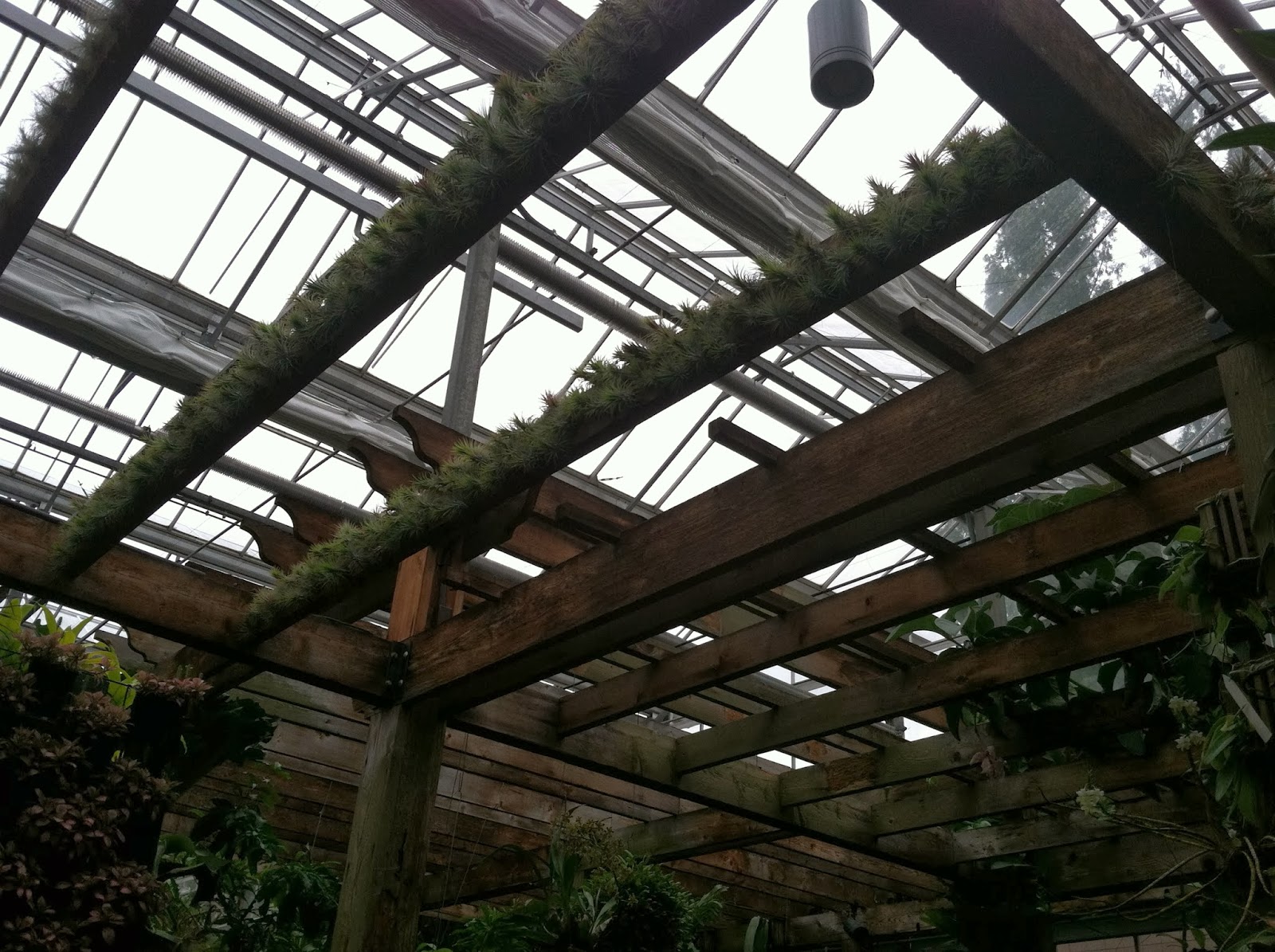
Above along the wood rafters, you can see true air plants growing in the moss. Just like orchids, they live on trees above the rain forest floor. The three key factors apply; light, temperature and humidity. 


The Cattleya or Laelia orchid has the showy and even fragrant flower most of us are familiar with at our high school prom as a corsage pinned on the shoulder or worn on the wrist. Amazingly, it's another orchid plant good for beginner's to grow. However, it does need a dormant period during the winter months. Make sure the roots dry between watering. The three key factors apply like all other orchid plants.


Did you know the vanilla bean is actually an orchid? Unlike most of it's family, it grows as a vine. Although, I think it would be interesting to grow, I think I'll start with an orchid for beginners.

The bean extracted from this orchid is a long and complicated process and makes the extract expensive, however, the cuttings can be bought online for $8.99 at Florida Hill Nursery.


For right now, I'll try growing this beautiful flower out of thin air. Hope you do too!


Until Next Time........
 
Happy Gardening 2013!
 
 
Posted by Wilma Smith 


Wednesday, November 6, 2013

Happy Fall Ya'll...!!


I don't care as much for the cooler weather but no doubt, I love the changes that come with our different seasons in the great state of Georgia. A single sycamore leaf (seen above), says it all for me in fall. A time to change, new ideas for the garden, festive color for the holidays and more time spent indoors with houseplants (that from spring through summer I neglect). 


You don't have to live in the mountains for the leaves to change just have more patience. I had a couple of fishermen enjoying the fall weather on this morning.


Sweet gum trees come in all colors, red, yellow, orange and even burgundy.


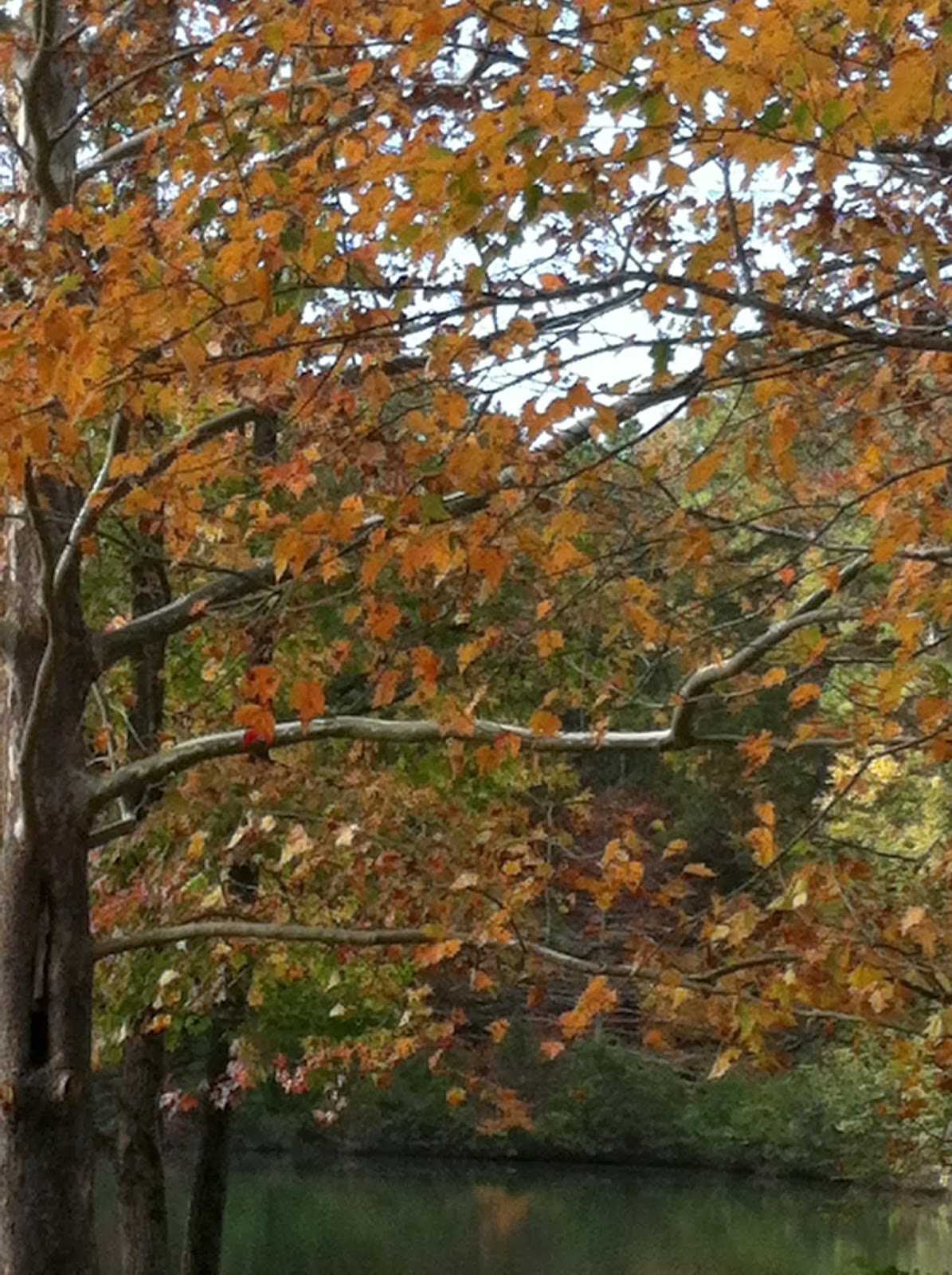
This golden maple in my backyard looks orange in the evening with the sun going down but earlier in the day it looks golden yellow.


Close to my house on the driveway there's plenty of red colors, native persimmon, sassafras and a few trees, I need to identify.


A golden young hickory enjoying rays from the evening sun.


An early morning picture of the same golden maple taken off my new deck.


Another view of the big lake and fall colors (all native trees).


The yellow tree on the right is a native sycamore.


 I love the reflections seen in the water on a beautiful fall day!


Winter will begin December 21st and maybe snow will replace the fall leaves in my driveway before spring. But right now...Happy Fall Ya'll..!!
 
 
Until Next Time.......
 
Happy Gardening 2013!
 
 
Posted by Wilma Smith


Wednesday, October 30, 2013

October -- Cooler Weather Plants Love the Temperature


Lately, nights are cooler and our October garden plants love the drop in temperatures. Collards (Brassica olerocea) is just one plant in this family that thrives in cooler temperatures. Other cousins include broccoli, cauliflower, brussel sprouts, kale, turnip greens, spinach and mustard greens.

No doubt, collards and turnip greens are a favorite of southerners, year round. But a true tradition to cook on New Year's Day, with ham hocks, black-eyed peas and cornbread seeped in "pot liqueur" or not.

As a kid, I was told eating greens meant dollars in my pocket and peas were change in my pocket the next year. You can imagine, I tried to eat my weight in both! Regardless, I enjoyed the meal.


Our cabbage plants are beginning to head, however, will need at least 6 to 8 more weeks to grown big firm heads prior to harvest.

I love cabbage steamed, in cole slaw, as an addition to stir fry and even in vegetable soup. Also, it's a great diet food, fills you up and burns off more calories digesting than in a serving (0 fat, 0 cholesterol, plus good fiber content).


We planted organic sugar pod snow peas to our cooler weather garden. Usually, we plant these in early spring but decided to try them to harvest late November or early December this year.

These sugar pod snow peas will grow into bushes 24-34" and produce 3-4" pods, unlike most snow peas we have planted early spring in the past needing a trellis or fence.

And, yes the name snow pea does mean, it will continue to grow even if it snows and can survive freezing temps, if not prolonged.


Broccoli, seen above is also a member of the (Brassica olerocea) family. It's hard to tell the difference between the broccoli and collard plants, unless you look close and see the leaves of the broccoli is more scalloped or frilly.
 
This plant was first introduced to America by Italian immigrants and is no surprise that Italy takes credit for it's origin.


Brussel sprouts is another member of this family, I call "mini cabbages." They certainly look and taste similar. However, Belgium takes credit for the origin, even though this plant was first documented growing in ancient Rome.
 
The family of cool weather plants we're growing in our garden this year need between 40 - 67 degree temperatures (some can grow in 75 degrees temps and below 40 degrees) to thrive and produce.   
 
There is no doubt all are beneficial to our health, full of vitamins, minerals and vital nutrients. There is no doubt with a little work in the yard or garden they are easy to grow in cooler temperatures (especially in our climate), whether you use a conventional garden, raised beds or containers. So....
 
 
Until Next Time.........

Happy Gardening 2013!


Posted by Wilma Smith